Showing posts with label Others 其它. Show all posts

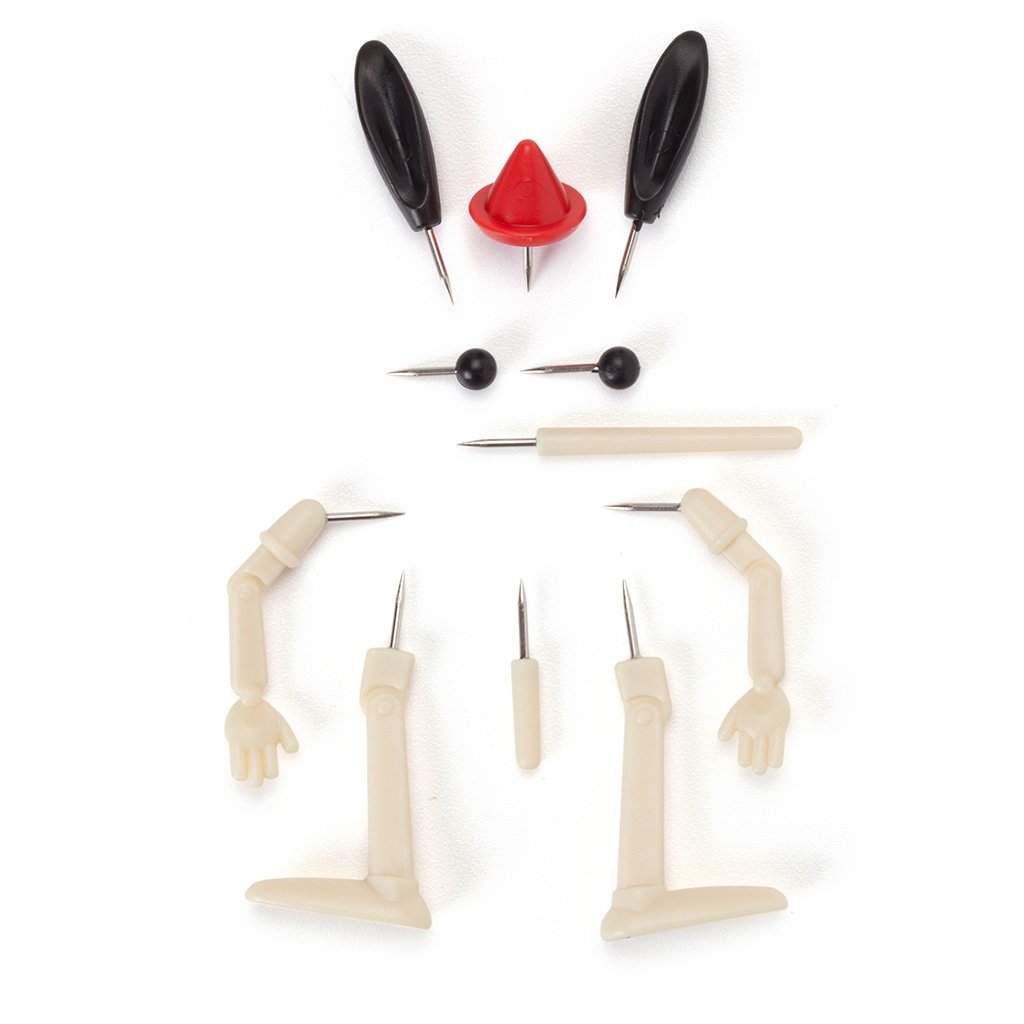
Corkers Pino 軟木塞公仔套件


很多人開完紅酒後有收集軟木塞的喜好,而Corkers Pino 軟木塞公仔套件就是利用這個機會,讓軟木塞有了新生命。預先設計好的擬人四肢及五官,可以讓使用者自行發揮想像空間,創造喜愛的舉動。除了保有軟木塞的原貌外,也添增更多的個人色彩與擺設趣味。


Finger Saver 手指保護器


打釘子時,為了避免鐵鎚勿打到手指,可以藉由器具做釘子固定的動作。同時,以木偶奇遇記(The Adventures of Pinocchio)的故事為聯想,將釘子固定器具設計成木偶造型,而釘子就成為木偶的鼻子,當木偶鼻子越來越短時,那他也就變誠實了。


Urinal Board 小便池板


這是Hsiang-Cheng(Sam) Wang最近想到的一個小玩意,稱它為Urinal Board小便池板。由於現在都市的發展,狗狗往往找不到熟習的樹方便一下,轉而向停在路邊車輛的輪胎紓解並傳遞訊息。聰明的華人發現此現象,也自製了簡單的活動板子防止狗狗直接尿在愛胎,間接地達到雙方(狗跟車主)的相處之道。而台灣這幾年來的生活水準越來越高(光看路上的雙B就知道),特地在活動板上有小便池的圖案,這樣連狗的生活水準都升級到了!

1月是添購新辦公室玩具好時機之一


去年聖誕節庫存沒銷完的辦公室玩具到了新的一年一月開始削價銷售,非常適合購買當今年朋友生日或特別節日的禮物準備。如果擔心辦公室玩具因時間流行性而退潮,可挑選一些像紙板遊戲(board games),拼圖,或經典辦公室玩具作選擇!

http://shopping.yahoo.com/news/january’s-best-shopping-deals-230438164.html?page=2

茶水間的聊天是工作時最浪費時間的活動


In the TrackVia sponsored survey of 300 people, 14 percent said that gabbing at the water cooler was the largest time waster at the office. The time lost dealing with software and computer problems came in second at 11 percent. Only 5 percent of the survey participants blamed Facebook, Twitter, or other social media accounts for wasting time at work.
The unscientific, opt-in poll sponsored by TrackVia received 300 responses from non-executive employees across the United States.
The giant mechanical fountain that's great for keeping employees hydrated throughout the day also seems to be a time sucker. The cups and spigot may actually lead to discussions about the latest episode of "Grey's Anatomy" or gossip instead of office assignments.
When it comes to peer-to-peer communication, the survey found that one in seven employees spent one to two hours per week addressing a misunderstanding or mis-communication with a colleague.
Good news for the corporate suits: your rules may work. According to the survey, 11 percent stated productivity increased thanks to rules put in place by the top brass.
"While some may argue that company policies and procedures can be considered a point of frustration and wasted time with workers, the survey found that only four percent of respondents considered it their biggest waste of time. In fact, when asked specifically about company policies, rules or procedures, some 44 percent said they actually helped increase productivity at least slightly," TrackVia said in a statement.
Some 17 percent of the respondents said they spent one to two hours a week dealing with office politics, and 7 percent said they spent three to five hours while another 7 percent spent six hours or more on this task.
But let's not hold a meeting to discuss this. Of those trapped in meetings during a typical week, 37 percent said at least half the time was wasted.
Source: ABC News

9句永遠不要對工作媽媽說的話


1. 你真的需要工作嗎?
2. 難道你不會想說你都不在你小朋友身邊嗎?
3. 你有聽說有關工作媽媽的那篇報導嗎?
4. 偶爾離開小孩應該感覺還不錯吧。
5. 你在家工作真好,但為什麼還要請保姆顧小孩呢?
6. 如果別人會照顧他們,那為什麼還要有小孩呢?
7. 你又有另一個學校活動要參加歐?你上星期不是才提早離開公司了嗎?
8. 如果我工作的話,我一定會非常想念他們(小孩)。
9. 女人就是應該在家陪小孩的。

Read More from Woman's Day

Apology Kit 道歉套組

工作上難免有做錯事或得罪別人的時候,利用Apology Kit 道歉套組把道歉化為實際的行動,改善公司的工作氛圍跟您自己的人際關係。套件含“I'm so so sorry"迷你布條,酒瓶道歉貼紙,兩個道歉杯墊及一張道歉信含信封。$ 8美金。

Let's Do Lunch 我們去吃午餐吧!


前一陣子在Slate網路雜誌看到一篇有關美國工作午休時間吃午餐的文章(Let's Do Lunch)。作者Rachael Levy在法國有4年的生活經驗,後來回美國所碰到的一些感想。其中講到法國學校的午餐時間5天中,有四天是1個小時,而有一天是2個小時。開始上班後,作者每天午休至少會離開座位30分鐘以上,並且在不同室內環境或戶外吃飯。同時也提到午休時間是一個讓腦筋重新整理及與同事交流的機會。太多人把吃午餐當作是怕下午會餓所以要去吃午餐填飽肚子,而非真正享受吃到食物本身的美味。好好的花時間在吃飯上吧,then we could live our days to the fullest!


Toys@Work Fun 4 ALL! 傳統產業創意趣味計畫

大家好!Toys@Work有鑒於現今中小企業的創業發展環境不如以往,因此,為了讓更多的傳統產業或新起事業能延續良好的產能技術與提供新的社會價值,若需開發與辦公室玩具或辦公室族群之相關商品,Toys@Work現在提供免資金的設計服務!非常歡迎想改變或剛起步需要設計支援的品質良好公司做合作!有意者請寫信洽詢toysatwork@gmail.com,謝謝!

Hello, everyone! Toys@Work is now providing a capital-free design service to great quality companies that want to make a different or start-ups that need design supports for good! Please feel free to email us to toysatwork@gmail.com if you're interested in this support, thank you! 


LEGO Patent Drawing1958 樂高專利圖


Sorry I'm Such An @$$hole Balloons 對不起我是白癡氣球


氣球給人的印象有歡樂與愉快的氛圍,尤其是當氣球的數量多,顏色多種,裡面要灌氦氣就更加分了。因此,如果要化解或做錯事陪罪同事的話,可以試試Sorry I'm Such An @$$hole Balloons 對不起我是白癡氣球的功效。$10美金

Should the World of Toys Be Gender-Free?


By PEGGY ORENSTEIN
Berkeley, Calif.

NOW that the wrapping paper and the infernal clamshell packaging have been relegated to the curb and the paying off of holiday bills has begun, the toy industry is gearing up — for Christmas 2012. And its early offerings have ignited a new debate over nature, nurture, toys and sex.

Hamleys, which is London’s 251-year-old version of F.A.O. Schwarz, recently dismantled its pink “girls” and blue “boys” sections in favor of a gender-neutral store with red-and-white signage. Rather than floors dedicated to Barbie dolls and action figures, merchandise is now organized by types (Soft Toys) and interests (Outdoor).

That free-to-be gesture was offset by Lego, whose Friends collection, aimed at girls, will hit stores this month with the goal of becoming a holiday must-have by the fall. Set in fictive Heartlake City (and supported by a $40 million marketing campaign), the line features new, pastel-colored, blocks that allow a budding Kardashian, among other things, to build herself a cafe or a beauty salon. Its tasty-sounding “ladyfig” characters are also taller and curvier than the typical Legoland denizen.

So who has it right? Should gender be systematically expunged from playthings? Or is Lego merely being realistic, earnestly meeting girls halfway in an attempt to stoke their interest in engineering?

Among the “10 characteristics for Lego” described in 1963 by a son of the founder was that it was “for girls and for boys,” as Bloomberg Businessweek reported. But the new Friends collection, Lego says, was based on months of anthropological research revealing that — gasp! — the sexes play differently.

While as toddlers they interact similarly with the company’s Duplo blocks, by preschool girls prefer playthings that are pretty, exude “harmony” and allow them to tell a story. They may enjoy building, but they favor role play. So it’s bye-bye Bionicles, hello princesses. In order to be gender-fair, today’s executives insist, they have to be gender-specific.

As any developmental psychologist will tell you, those observations are, to a degree, correct. Toy choice among young children is the Big Kahuna of sex differences, one of the largest across the life span. It transcends not only culture but species: in two separate studies of primates, in 2002 and 2008, researchers found that males gravitated toward stereotypically masculine toys (like cars and balls) while females went ape for dolls. Both sexes, incidentally, appreciated stuffed animals and books.

Human boys and girls not only tend to play differently from one another — with girls typically clustering in pairs or trios, chatting together more than boys and playing more cooperatively — but, when given a choice, usually prefer hanging with their own kind.

Score one for Lego, right? Not so fast. Preschoolers may be the self-appointed chiefs of the gender police, eager to enforce and embrace the most rigid views. Yet, according Lise Eliot, a neuroscientist and the author of “Pink Brain, Blue Brain,” that’s also the age when their brains are most malleable, most open to influence on the abilities and roles that traditionally go with their sex.

Every experience, every interaction, every activity — when they laugh, cry, learn, play — strengthens some neural circuits at the expense of others, and the younger the child the greater the effect. Consider: boys from more egalitarian homes are more nurturing toward babies. Meanwhile, in a study of more than 5,000 3-year-olds, girls with older brothers had stronger spatial skills than both girls and boys with older sisters.

At issue, then, is not nature or nurture but how nurture becomes nature: the environment in which children play and grow can encourage a range of aptitudes or foreclose them. So blithely indulging — let alone exploiting — stereotypically gendered play patterns may have a more negative long-term impact on kids’ potential than parents imagine. And promoting, without forcing, cross-sex friendships as well as a breadth of play styles may be more beneficial. There is even evidence that children who have opposite-sex friendships during their early years have healthier romantic relationships as teenagers.

Traditionally, toys were intended to communicate parental values and expectations, to train children for their future adult roles. Today’s boys and girls will eventually be one another’s professional peers, employers, employees, romantic partners, co-parents. How can they develop skills for such collaborations from toys that increasingly emphasize, reinforce, or even create, gender differences? What do girls learn about who they should be from Lego kits with beauty parlors or the flood of “girl friendly” science kits that run the gamut from “beauty spa lab” to “perfume factory”?

The rebellion against such gender apartheid may have begun. Consider the latest cute-kid video to go viral on YouTube: “Riley on Marketing” shows a little girl in front of a wall of pink packaging, asking, “Why do all the girls have to buy pink stuff and all the boys have to buy different-color stuff?” It has been viewed more than 2.4 million times.

Perhaps, then, Hamleys is on to something, though it will doubtless meet with resistance — even rejection — from both its pint-size customers and multinational vendors. As for me, I’m trying to track down a poster of a 1981 ad for a Lego “universal” building set to give to my daughter. In it, a freckle-faced girl with copper-colored braids, baggy jeans, a T-shirt and sneakers proudly holds out a jumbly, multi-hued Lego creation. Beneath it, a tag line reads, “What it is is beautiful.”

Peggy Orenstein is the author, most recently, of “Cinderella Ate My Daughter: Dispatches From the Front Lines of the New Girlie-Girl Culture.”

Source

Don't drag this image 不要拖拉這張影像

Taxi Hailer 計程車招手套


是否有常常站在馬路旁叫不到計程車而讓你遲到?Taxi Hailer 計程車招手套是目前Toys@Work所到最簡單、最有效的解決方式,TAXI!

Inflatable Beard 充氣鬍子


有了Inflatable Beard 充氣鬍子,男人要有鬍子不再是難事!也不需要經過漫長的日子才可以更濃密,只需要吹幾口氣,幾秒鐘,就搞定!$4 美金

Instant Cooling Foam Spray 快速降溫噴霧泡沫


這是由日本人設計的Instant Cooling Foam Spray 快速降溫噴霧泡沫。擠出來的泡沫感覺就像是一團可以捏的五彩碎紙,泡沫會逐漸膨脹,並砰砰釋放出涼爽的空氣。最有趣的是它可以塑型成各種形狀附著在身上!


Tickle me plant 含羞草


第一次知道有這種植物的時候,感覺好奇妙,現在看到總是會勾起兒時的回憶!如果有人真的請我推薦在辦公室裡該養甚麼植物的話,那Tickle me plant 含羞草就是我的第一選擇。心情不好時,一定不忘記請他表演,垂頭含羞的模樣。

Water Balloon Filler and Tying Tool 水球頭


夏天到了!心裡第一個念頭就是去玩水,不管是去水上遊樂園或家裡附近的游泳池都是個不錯的選擇。而水球大戰更是隨手可玩的團體遊戲!其中的關鍵的汽球數量跟裝水速度。如果比較內行的人應該就知到下圖Tie-Not的使用方式。


Water Balloon Filler and Tying Tool 水球頭則是結合水龍頭跟氣球快速打結的功能,大大增加在水戰中的火力資源與戰鬥力。水球教戰SOP步驟如下方影片所示:

Wrong Number Generator 錯誤號碼總機


如果你真的很討厭公司裡某個同事,那就把這Wrong Number Generator 錯誤號碼總機接上他的電話線。當他撥打電話時,錯誤號碼總機會搞亂他所撥的號碼,並隨機撥打到其它號碼去!更奸詐的是錯誤號碼總機打錯號碼是75%的機率,也就是說,25%的機率是正確撥打的,讓人感覺是自己撥錯錯亂~

7 Products Under $5 That Made Millions 七種賺百萬美金以上的五元美金以下商品

by Claire Bradley

America is the country of innovation and inventions, big and small. But what about those smallest, least expensive of inventions? Here are seven products under five dollars that made a million -- and in some cases, a lot more than that.

1. Post-it Notes

Unless you've been living under rock, you've probably used a Post-it at least once in your life. Those handy little sticky notes actually started as a failed adhesive at 3M (NYSE: MMM - News) -- the glue wasn't sticky enough. 3M's Arthur Fry began using the glue to add removable sticky notes to his reports, and fellow employees quickly started requesting them for their own use. The Post-it is now one of the least-expensive inventions that's since made the company millions, and has evolved to 4,000 different products -- not bad for a failed adhesive.


2. Crazy Straw

Parents know: kids can be finicky eaters and drinkers. It's a problem of the ages, and back in 1936, Denver inventor Arthur P. Gildersleeve decided to bend a straw to add interest and get kids to drink milk and juice. The simple invention is still a success, and found in stores all over the world many decades after it was first invented.


3. Slinky

This simple invention by Richard James got its start at Gimbel's department store in Philadelphia in 1945, and was a raging success from day one -- the 400 Slinkies the store carried sold out in 90 minutes. Over 300 million Slinkies have sold since, making it a classic and inexpensive staple in most kids' rooms.


4. Silly Bandz

If you have kids, you'll likely be familiar with Silly Bandz, those elastics shaped like animals, rock stars and other personalized shapes. The elastic (wrist) bands were last year's craze, after only being on the market for a short time. Despite a host of imitators, Silly Bandz sell 1 million packs a week now.


5. Pet Rock

It started as a joke: at a get-together with friends in 1975, Gary Dahl talked about how messy pets were, and how he preferred his pet rock. After having fun with the idea with his friends, Dahl wrote "The Pet Rock Training Manual" which he packed in a box along with the rock, with a $3.95 price tag -- and the Pet Rock was born. What started as some fun in April was selling 10,000 Pet Rocks a day by October, making Dahl millions. It is estimated that the creator made over $15 million during the first half year of "production." The Pet Rock is now a long-forgotten fad, but this invention shows that sometimes a joke and a bit of determination can lead to a fortune.


6. Antenna Ball

It's hard to imagine when you see those little antenna balls, but someone made more than a million dollars off those things. Back in 1997, Jason Wall was inspired by a Jack in the Box commercial and started to design different antenna balls. He began selling them at his local California auto stores, and soon contracted with Wal-Mart (NYSE: WMT - News) to sell his antenna balls. Jason Wall became a multi-millionaire, and president and CEO of In-Concept.


7. Koosh Ball

Another simple ball invention that made millions is the Koosh ball, invented by Scott Stillinger in 1987. Stillinger wanted a ball that was easier to catch for his children, and he tied rubber bands together to create the soft Koosh ball. He expanded his endeavor to found his company OddzOn, which was later bought out by Russ Berrie and Company. Today, you can still buy Koosh balls for a few bucks, proving that some simple inventions stand the test of time.


The Bottom Line
Are you inspired? Whether your idea answers a need, like the Post-It, or a fad, like the Pet Rock, imagination can yield big bucks if you persevere. The bad news is that the odds are not in your favor as an inventor -- 99.9% of inventions never see a successful product launch, so don't plan to spend your future millions just yet. The good news is that these inventors prove that you can beat those odds, with a good idea, some perseverance and a little luck.

七種賺百萬美金以上的五元美金以下商品:便利貼(Post-it Notes), 造型吸管(Crazy Straw), 彈簧玩具(Slinky), 造型橡皮筋(Silly Bandz), 寵物石頭(Pet Rock), 造型天線球(Antenna Ball), 毛毛塑膠球(Koosh Ball)。五種是適合在辦公室裡使用~